
The IDP Small Hot Water Drills (SHWD) use hot water to create shallow holes in ice. They are non-coring and are typically used to produce holes nominally 10-cm in diameter down to a maximum practical depth of 60 meters. Primary use is for shot holes for seismic work, but they have also been used for access holes through a thin ice shelf. These drills are transportable by light aircraft and helicopter.
Substantial modifications to the drills were made between 2014 and 2016, including refurbishment of the heaters and specification and procurement of new nozzle kits. Additional modifications and upgrades were made to the drills in 2017, and IDP built up a fully operational second unit. One of the two systems has a 30 meter depth capability, and the second system has a depth capability to 60 meters. Lightweight Siglin sleds and system covers for protection from the elements were implemented. Following upgrades to the system and upon review of user feedback, IDP now recommends that trained IDP operators deploy with each system. The system was tested in West Antarctica by two IDP personnel during the 2022-2023 field season and was subsequently used in support of a science project on Thwaites Glacier during the 2023-2024 field season where it was used to drill 32 holes to a depth of 50 m each.
Current Status
IDP has two small hot water drills in inventory, one with 30 m and one with 60 m depth capability. In 2024, IDP performed testing of one system in Madison, worked to troubleshoot issues with the heaters/thermostats, and documented the performance of heaters and other equipment. Burner controller mounting was made more secure and burner nozzles and pressure gauges were replaced. The Operations and Maintenance Manual was also updated. The second system returned to Madison in April 2025 after lengthy storage and use in Antarctica. Maintenance is conducted between field seasons as needed.
Equipment Details
| Name | Small Hot Water Drill |
|---|---|
| Type |
Type
Hot Water Drill
|
| Number in Inventory |
Number in Inventory
2
|
| Max. Practical Depth |
Max. Practical Depth
Reliable and efficient to a depth of 25-30 m
|
| Hole Diameter |
Hole Diameter
Variable (10 cm nominal)
|
| IDP Driller Required? |
IDP Driller Required?
Typically at least one IDP driller (total of 2 people required for drill operations)
|
| Drill Fluid Required? |
Drill Fluid Required?
No
|
| Power Requirements/ Source |
Power Requirements/ Source
120 V, 5 kW generator |
| Estimated Drilling Time |
Estimated Drilling Time
30 m - 15 minutes |
| Time to Move (Breakdown and Setup) |
Time to Move (Breakdown and Setup)
20 minutes |
| Helicopter Transportable? |
Helicopter Transportable?
Yes
|
| Light Aircraft Transportable? |
Light Aircraft Transportable?
Yes
|
| Shipping Weight |
Shipping Weight
3500 lbs; Assembled for operation w/o fuel: 2200 lbs |
| Shipping Volume (Cube) |
Shipping Cube
400 |
Documents
| Citation | Year |
|---|---|
| NSF Ice Drilling Program (2025) Small Hot Water Drill Operations and Maintenance Manual. 1-29. | 2025 |
Photos
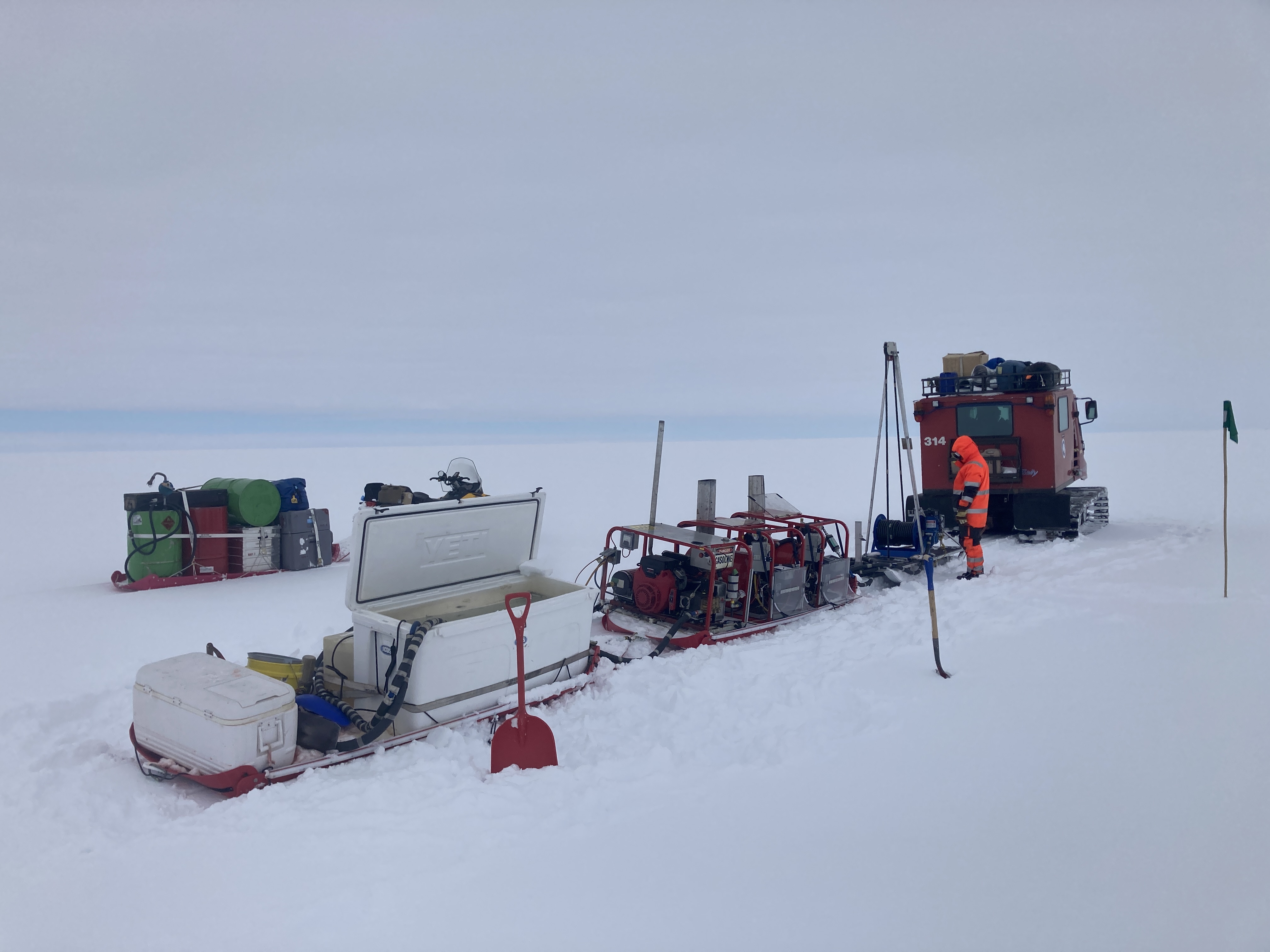
Small Hot Water Drill (SHWD) traverse setup during the 2023/24 Antarctic field season. The SHWD was used at Lower Thwaites Glacier to drill thirty-two holes for seismic shot hole work. Credit: Tanner Kuhl.
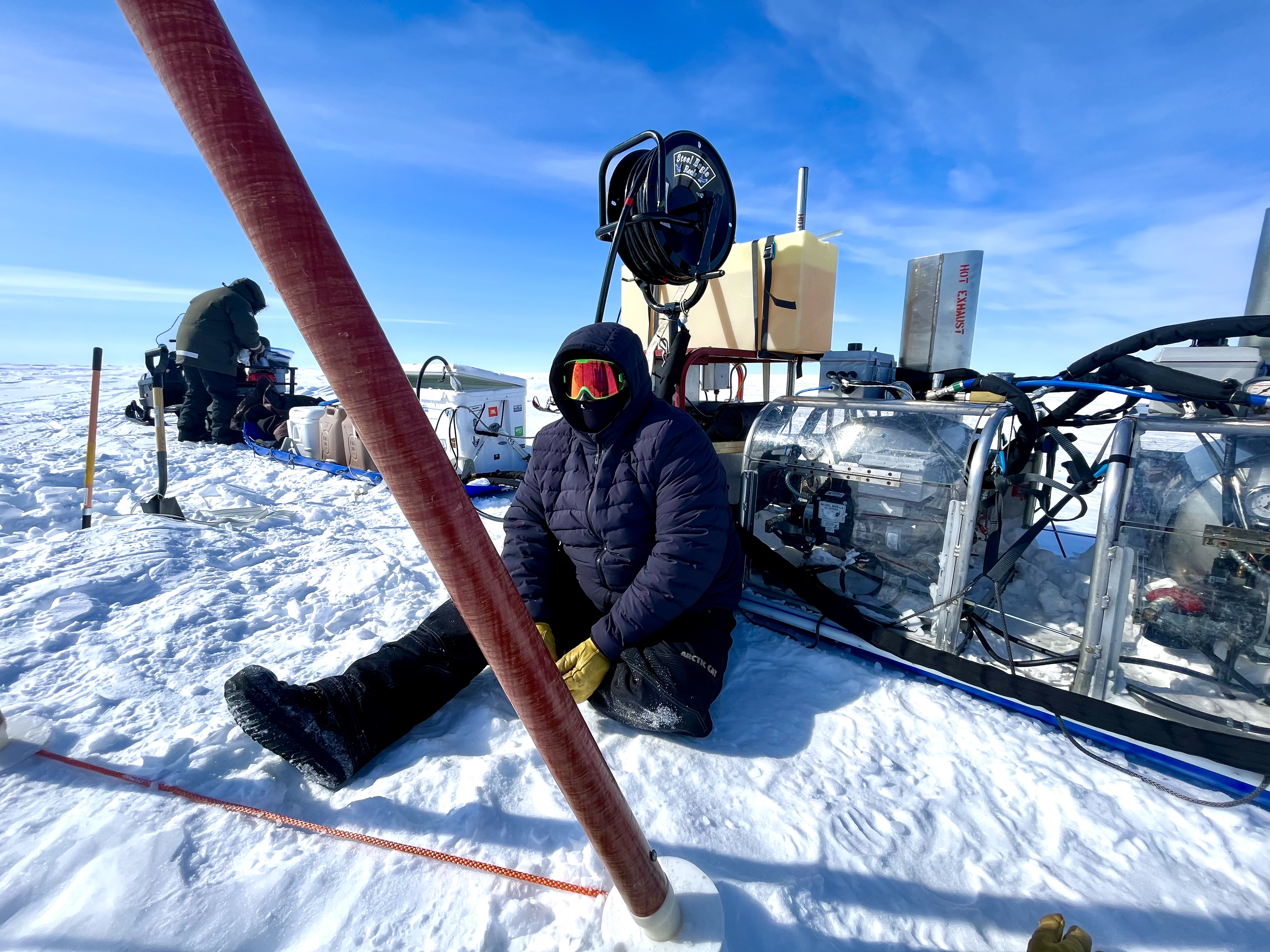
The GreenDrill site selection team at the NEGIS camp in Dronning Louise Land, Greenland, during the 2023 field season. The pump/generator for the Small Hot Water Drill is the red unit below the hose reel and the two silver‐colored units are water heaters. The sled to the left contains the water tank (large white tank). Credit: Amanda Willet.
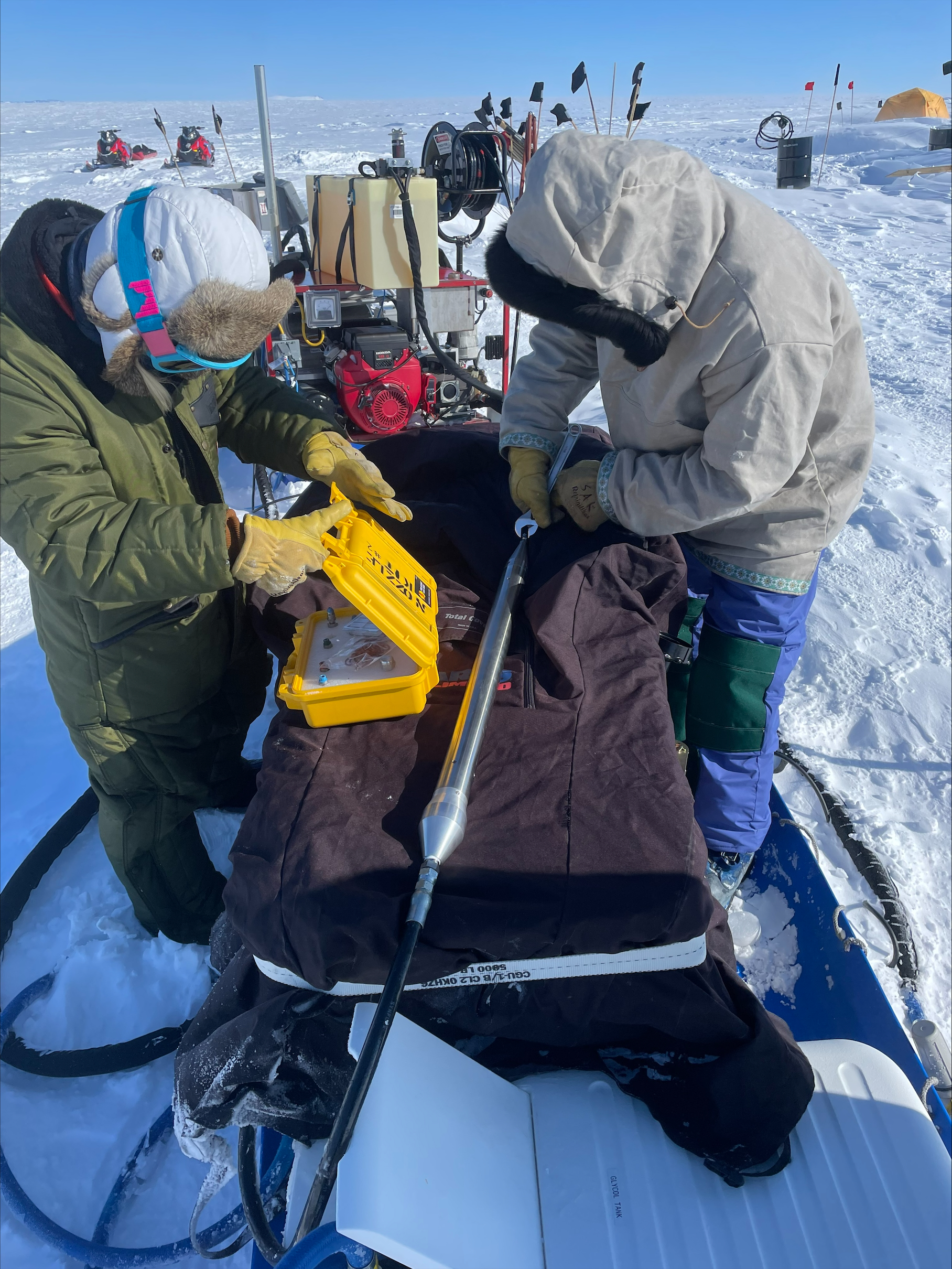
The GreenDrill site selection team at the NEGIS camp in Dronning Louise Land, Greenland, during the 2023 field season. Amanda Willet and Sridhar Anandakrishnan prepare the drill head of the Small Hot Water Drill. Credit: Sveinn Sveinsson.
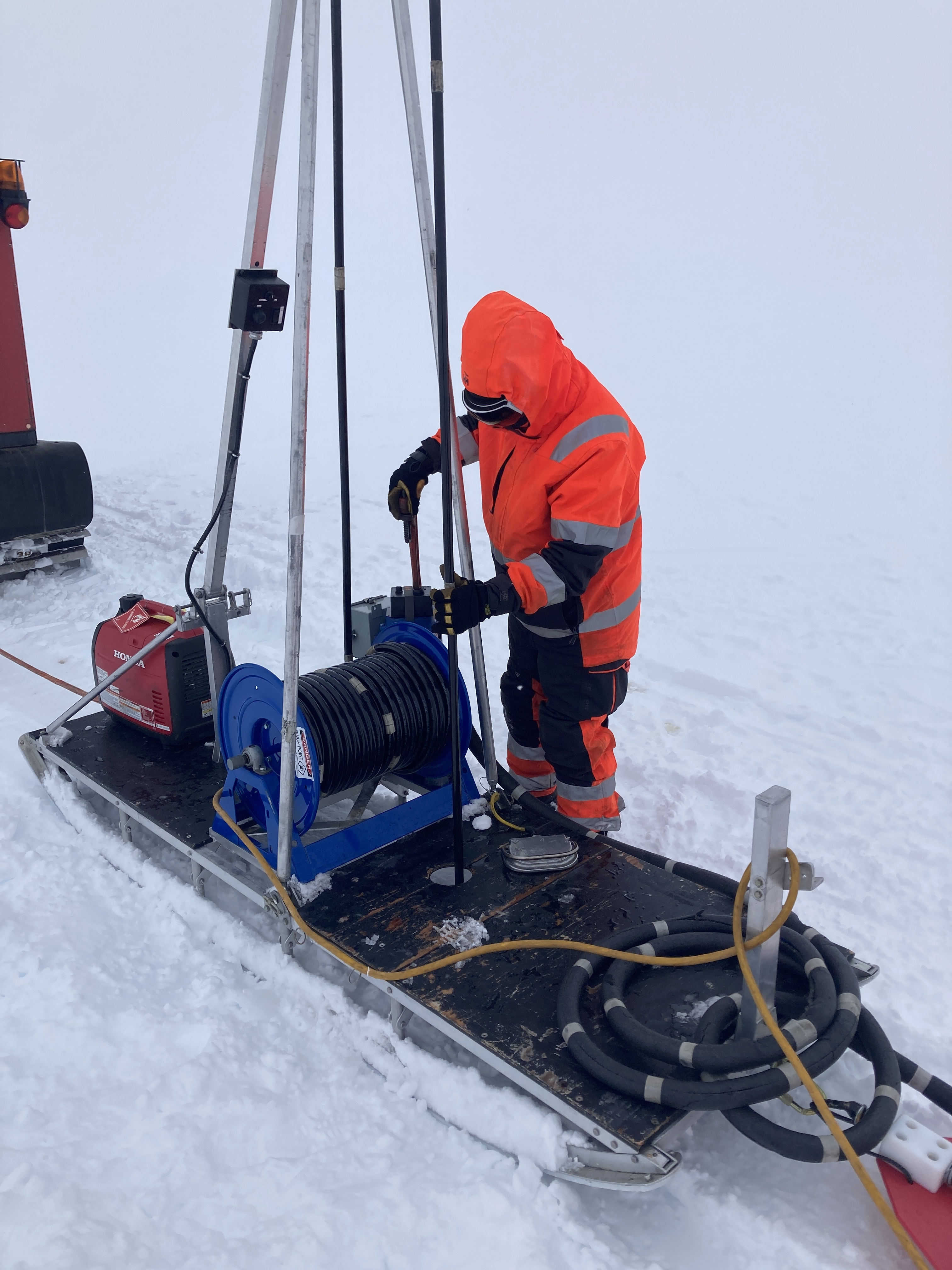
Small Hot Water Drill (SHWD) traverse setup during the 2023/24 Antarctic field season. The SHWD was used at Lower Thwaites Glacier to drill thirty-two holes for seismic shot hole work. Credit: Tanner Kuhl.
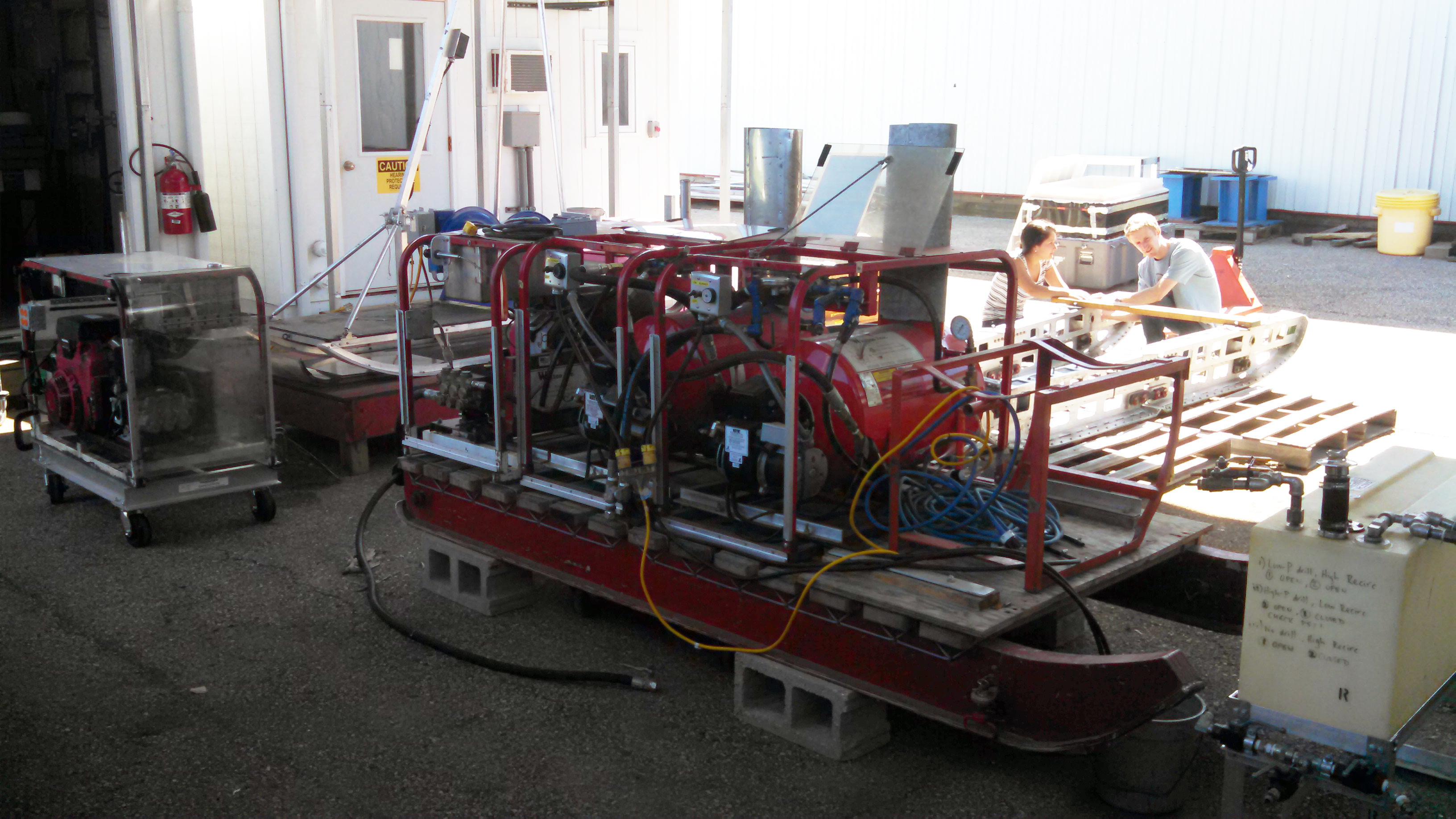
The Small Hot Water Drill set-up at the University of Wisconsin's Physical Sciences Laboratory for testing/upgrade during the 2015 summer. Photo: Terry Benson
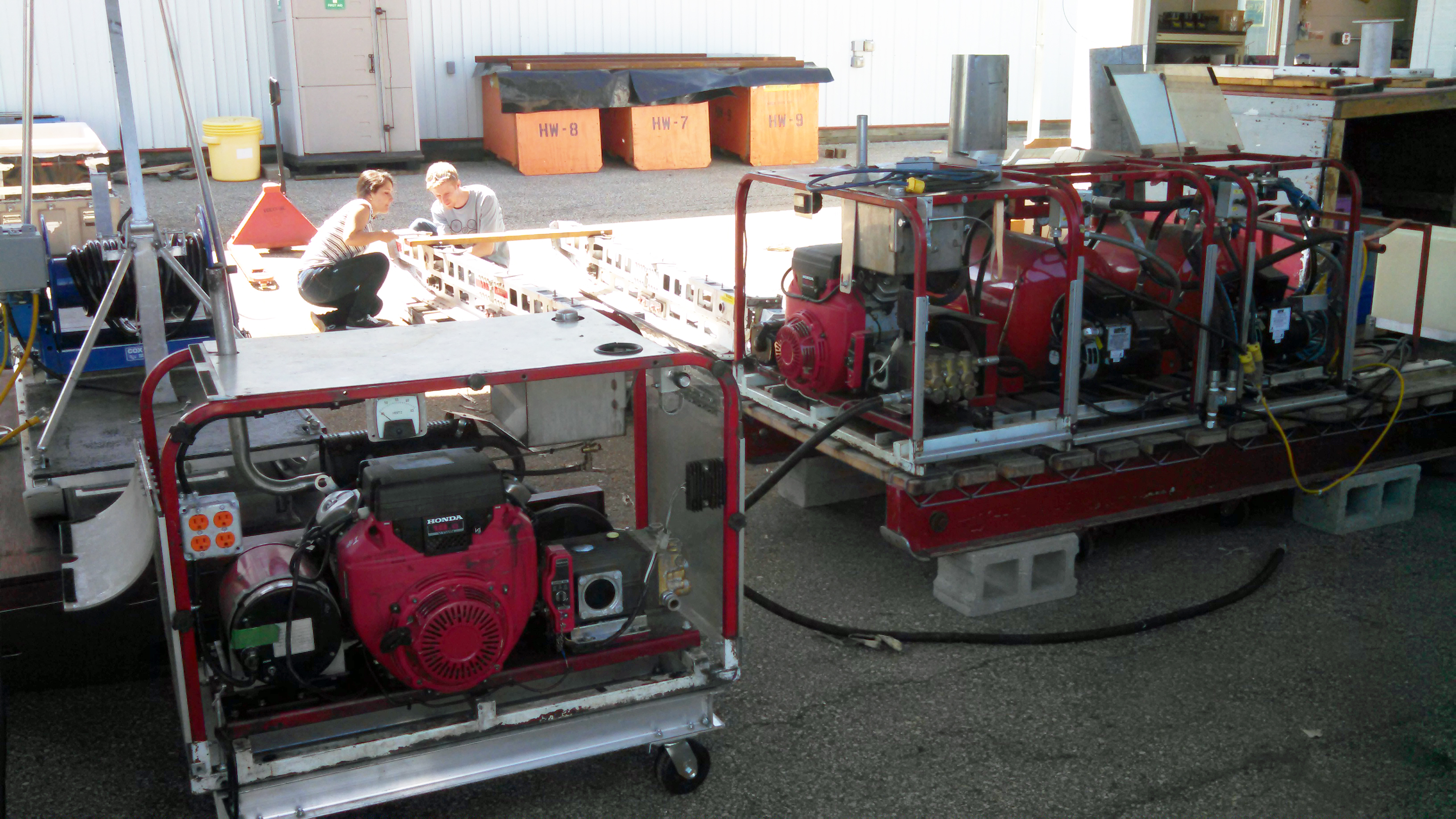
The Small Hot Water Drill set-up at the University of Wisconsin's Physical Sciences Laboratory for testing/upgrade during the 2015 summer. Photo: Terry Benson