If you are preparing a National Science Foundation (NSF) proposal that includes any kind of support from IDP, you must include a Letter of Support from IDP in the proposal. Researchers are asked to provide IDP with a detailed support request six weeks prior to the date the Letter of Support is required. Early submissions are strongly encouraged.
Researchers are also encouraged to contact IDP prior to submittingConcept Outlines to the NSF to discuss equipment availability and supportability for their upcoming proposed work.
Scientists who seek to include IDP education and outreach activities associated with U.S. ice coring or drilling science projects should contact Louise Huffman at Louise.T.Huffman@Dartmouth.edu during their proposal preparation stage.
If you are preparing a National Science Foundation (NSF) proposal that includes any kind of support from IDP, you must include a Letter of Support from IDP in the proposal. Researchers are asked to provide IDP with a detailed support request six weeks prior to the date the Letter of Support is required. Early submissions are strongly encouraged.
Scientists who seek to include IDP education and outreach activities associated with U.S. ice coring or drilling science projects should contact Louise Huffman at Louise.T.Huffman@Dartmouth.edu during their proposal preparation stage.
If you are preparing a National Science Foundation (NSF) proposal that includes any kind of support from IDP, you must include a Letter of Support from IDP in the proposal. If your fieldwork requires support from the U.S. Antarctic Program (USAP), you should include a Letter of Support from IDP in the pre-proposal Concept Outline (see NSF 23-509 for more details) .
Researchers are asked to provide IDP with a detailed support request three weeks prior to the date the Letter of Support is required. Early submissions are strongly encouraged.
Scientists who seek to include IDP education and outreach activities associated with U.S. ice coring or drilling science projects should contact Louise Huffman at Louise.T.Huffman@Dartmouth.edu during their proposal preparation stage.
IDP Letter of Support for Pre-proposal Concept Outlines for USAP Antarctic Fieldwork
Article Content:
As a reminder, the Antarctic Research Requiring U.S. Antarctic Program (USAP) Support for Fieldwork NSF program solicitation (NSF 23-509) requires the submittal of a Concept Outline describing needed logistical support prior to submission of a full proposal. The Concept Outline allows for a preliminary assessment of the logistics feasibility of the proposed activities and feedback to the PI about potential supportability for proposed activities before the development of a full proposal. The Concept Outline requires the same information as the Logistics Requirement and Field Plan. And for projects requesting services from NSF-supported research support facilities (such as IRIS, UNAVCO, PGC, IDP, NCALM, etc.), a letter from the facility indicating the feasibility and additional costs needed to support the proposed research is a requirement for the Logistics Requirement and Field Plan.
If you are preparing a USAP fieldwork proposal that includes any support from IDP, you should include a Letter of Support from IDP in the Concept Outline. Researchers are asked to provide IDP with a detailed support request three weeks prior to the date the Letter of Support is required. Early submissions are strongly encouraged.
If you are preparing a National Science Foundation (NSF) proposal that includes any kind of support from IDP, you must include a Letter of Support from IDP in the proposal.
Researchers are asked to provide IDP with a detailed support request three weeks prior to the date the Letter of Support is required. Early submissions are strongly encouraged.
Scientists who seek to include IDP education and outreach activities associated with U.S. ice coring or drilling science projects should contact Louise Huffman at Louise.T.Huffman@Dartmouth.edu during their proposal preparation stage.
Early Career Travel Grant Opportunity for the 2021 IPICS & ICYS meeting
Article Content:
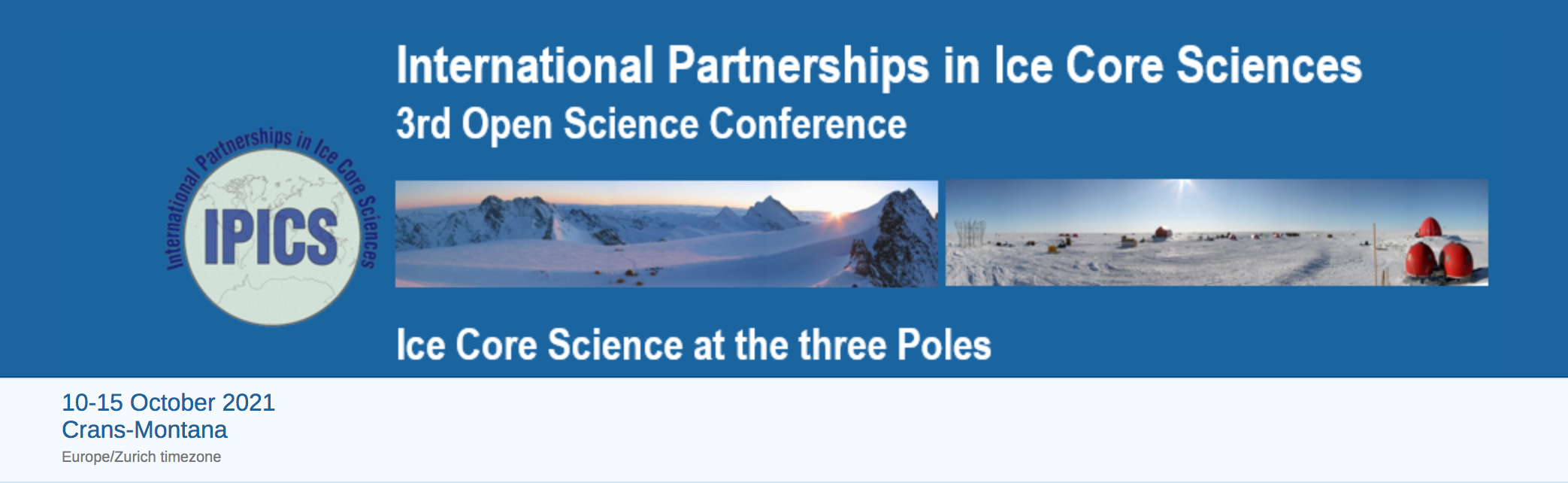
The U.S. Ice Drilling Program (IDP) offers an NSF-sponsored opportunity for early career scientists, postdocs, and PhD students in the U.S. to apply for travel support to the October 2021 Ice Core Young Scientists (ICYS) and International Partnerships in Ice Core Sciences (IPICS) Open Science meeting in Crans-Montana, Switzerland ( https://indico.psi.ch/event/6697/overview ). Applicants must be currently employed by a university or research institution within the U.S. Successful applicants will receive reimbursement toward their conference registration, air and ground travel, and lodging costs up to a maximum of $3,615 US; the exact amount will depend on the number of qualified applicants. Applicants must plan to attend both the IPICS and the ICYS meetings. Qualified applicants will receive confirmation of their maximum potential reimbursement amount from IDP by June 1, 2021. Reimbursement based on receipts will be issued soon after the meeting.
Applications will be accepted until April 30, 2021. To apply, create a single pdf document that contains the following information:
A one-page brief CV that includes your name, current position, affiliation, contact information, education, and publications
Listing of your estimated travel costs
A one-page description of how you will contribute to the IPICS and the Ice Core Young Scientists meetings, and what you will do, within two months after the meetings, to use findings from the meetings in materials you will produce to inspire your students and your community in STEM science.
Please email your application toIcedrill@Dartmouth.edubefore April 30, 2021, under the subject heading “Application for Early Career Travel”. Confirmation will be sent to awardees by June 1, 2021.
Image
The IPICS 3rd Open Science Conference is taking place in Switzerland on from Sunday, October 10, 2021 through Friday, October 15, 2021.
If you are preparing a National Science Foundation (NSF) proposal that includes any kind of support from IDP, you must include a Letter of Support from IDP in the proposal.
Researchers are asked to provide IDP with a detailed support request three weeks prior to the date the Letter of Support is required. Early submissions are strongly encouraged.
Although there are no proposal deadlines for the Antarctic Research and Arctic Research solicitations, NSF advises researchers to submit proposals 18 months in advance of their potential deployment date.
Early Career Travel Opportunity for the IPICS & ICYS Meeting
Article Content:
The U.S. Ice Drilling Program (IDP) offers an NSF-sponsored opportunity for U.S. early career scientists, postdocs, and PhD students in the U.S. to apply for travel support to the October 2020 ICYS and IPICS open science meetings in Crans-Montana, Switzerland. Successful applicants will be provided air and train tickets and will be registered for the conference by IDP. In addition, successful applicants will receive reimbursement of receipts for their cost of lodging and meals up to a potential maximum of $1,320 US; the exact amount will depend on the number of qualified applicants. Applicants must plan to attend the October 18 ICYS meeting as well. Applicants will be informed of the results of their application from IDP by April 6, 2020.
Image
Applications will be accepted until 31 March 2020. To apply, create one pdf document that contains the following information:
A one-page brief CV that includes your full name, current position, affiliation, mailing address, telephone number, education, and publication list
Your draft one-page abstract for the IPICS meeting
Please email your application to IceDrill@Dartmouth.edubefore 31 March 2020, under the subject heading “Application for Early Career Travel”.
If you are preparing a proposal that includes any kind of support from IDPO-IDDO, you must include a Letter of Support/Scope of Work (LoS/SoW) document from IDPO-IDDO in the proposal. Researchers are asked to provide IDPO-IDDO with a detailed support request six weeks prior to the date the LoS/SoW document is required. Early submissions are strongly encouraged.
One aspect that has changed in our Letter of Support is that the costs for IDDO driller salary associated with providing the field drilling support is no longer requested from the NSF Science Program Managers, rather it is provided from within our IDPO-IDDO Cooperative Agreement with NSF. This means that the IDDO costs to NSF science projects are lower than they have been in the past.
If you are preparing a proposal that includes any kind of support from IDPO-IDDO, you must include a Letter of Support/Scope of Work (LoS/SoW) document from IDPO-IDDO in the proposal. Researchers are asked to provide IDPO-IDDO with a detailed support request six weeks prior to the date the LoS/SoW document is required. Early submissions are strongly encouraged.
If you are preparing a proposal that includes any kind of support from IDPO-IDDO, you must include a Letter of Support/Scope of Work (LOS/SOW) document from IDPO-IDDO in the proposal. Researchers are asked to provide IDPO-IDDO with a detailed support request six weeks prior to the date the Letter of Support/Scope of Work document is required. Early submissions are strongly encouraged.
If you are preparing a proposal that includes any kind of support from IDPO-IDDO, you must include a Letter of Support/Scope of Work (LOS/SOW) document from IDPO-IDDO in the proposal. Researchers are asked to provide IDPO-IDDO with a detailed support request six weeks prior to the date the support document is required. Early submissions are strongly encouraged.
If you are preparing a proposal that includes any kind of support from IDPO-IDDO, you must include a support letter and cost estimate from IDPO-IDDO in the proposal. Researchers are asked to provide IDPO-IDDO with a detailed support request six weeks prior to the date the support letter and cost estimate are required. Early submissions are strongly encouraged.
If you are preparing a proposal that includes any kind of ice drilling or ice coring support from IDPO-IDDO, you must complete a Field Project Support Requirements Form and submit it to IDPO-IDDO via icedrill@ dartmouth.edu at least six weeks before your proposal deadline. Once IDPO-IDDO receives your Field Project Support Requirements Form, we will provide you with a Letter of Support and Scope of Work/Cost Estimate document that MUST be included with your proposal. If you are submitting a proposal to NSF, the Letter of Support and Scope of Work/Cost Estimate document should be included as Supplemental Information in your proposal, and it is recommended that you also notify the relevant NSF Program Officer that your proposal requires support from IDPO-IDDO.
Updated Data Management and Data Reporting Requirements for NSF Division of Polar Programs Research Awards
Article Content:
The Division of Polar Programs (PLR) at the National Science Foundation updated its data management and data reporting policy, effective January 21, 2016. In particular, there are special data archiving requirements for projects supported by Arctic Sciences, as well as separate data archiving requirements specifically for projects supported by Antarctic Sciences. If you have not reviewed the PLR data policy recently, you are strongly encouraged to do so. The updated data policy is available online at: http://www.nsf.gov/geo/geo-data-policies/plr/plr-data-mgt-policy-jan16.pdf
April 4, 2016 Deadline for Requesting Ice Drilling Support for NSF Antarctic Research Proposals
Article Content:
Researchers intending to submit proposals requiring ice drilling or ice coring support to the National Science Foundation (NSF) 2016 Antarctic Research Opportunities (16-541) solicitation are reminded that they must contact the Ice Drilling Program Office (IDPO)/Ice Drilling Design and Operations (IDDO).
Contact must be made via email ( IceDrill@Dartmouth.edu ) at least 6 weeks prior to the NSF proposal deadline, in this case by 4 APRIL 2016.
IDPO/IDDO contact deadline: Monday, 4 April 2016 NSF full proposal deadline: Monday, 16 May 2016
NSF Solicitation for Ice Coring and Drilling Program for the Office of Polar Programs
Article Content:
The Office of Polar Programs at the National Science Foundation (NSF) requests proposals from interested groups to support current and future ice drilling activities. Specifically, proposals are requested for the continuation of the Ice Drilling Program Office (IDPO), which helps coordinate long-term and short-term planning for ice coring and drilling projects, in collaboration with the science community, and to be the principal supplier of ice drilling and coring support and expertise for NSF-funded research. The IDPO will work with an Ice Drilling Development Office (IDDO) that provides the engineering design support for new drilling systems as well as the operation and maintenance of existing systems. The NSF proposal deadline is January 22, 2013. For more information, visit: http://www.nsf.gov/funding/pgm_summ.jsp?pims_id=504794
IDPO/IDDO will be submitting a proposal for the competition.
If you are preparing a NSF proposal that includes any kind of support from IDP, you must include a Letter of Support from IDP in the proposal. Researchers are asked to provide IDP with a detailed support request six weeks prior to the date the Letter of Support is required. Early submissions are strongly encouraged.
Researchers are also encouraged to contact IDP prior to submitting Concept Outlines to the NSF to discuss equipment availability and supportability for their upcoming proposed work.
The U.S. National Science Foundation Ice Drilling Program (IDP) is a NSF-funded facility. IDP conducts integrated planning for the ice drilling science and technology communities, and provides drilling technology and operational support that enables the community to advance the frontiers of science.