2026 Spring/Summer Fieldwork
IDP is providing support to the following projects during the 2026 spring/summer field season:
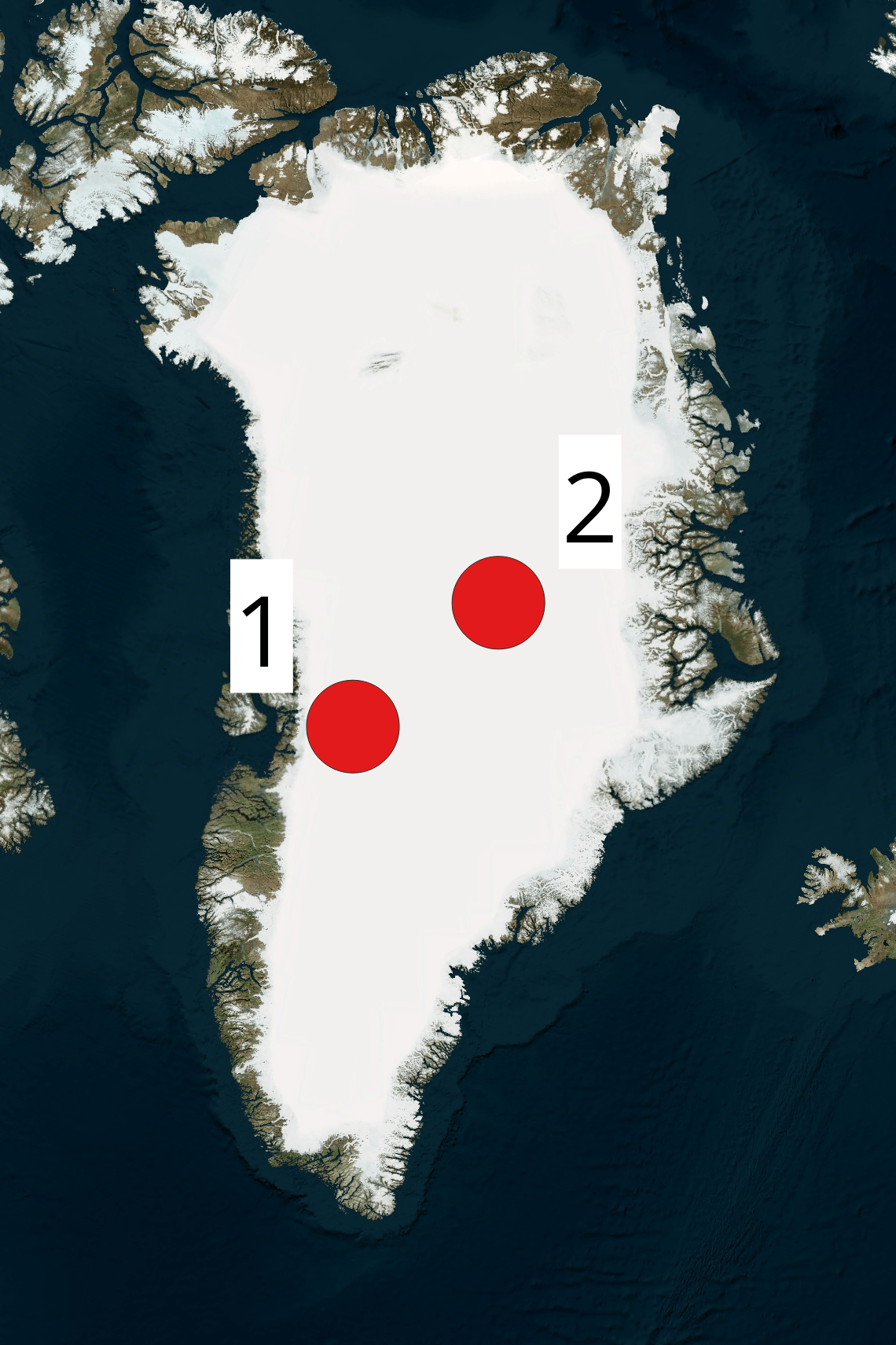
(1) The Collaborative Research: AON Network for Observing Transformation of the Greenland Ice Sheet Firn Layer project (PIs Joel Harper and Toby Meierbachtol; NSF award numbers 2113391 and 2113392) will establish a network of instrumented sites to observe the transformation of the Greenland Ice Sheet’s percolation zone firn layer. Using the IDDO Hand Auger and Sidewinder, repeat cores are being collected over five years to track density and ice content changes, and instrumentation installed in core holes will monitor firn temperature evolution and compaction of the firn layer. The data from these efforts will be highly valuable to scientists focused on changes in the storage capacity of the firn layer, process details of meltwater infiltration in cold firn, and the influence of firn compaction and melt on satellite-observed ice sheet elevation.
(2) The WoU-MMA: Ice Characterization and Calibration to Enable Ultra-High Energy Neutrino Astronomy project (PI Dave Besson; NSF award number 2514262) will extract ice cores at Summit, Greenland, to make fine-grained permittivity measurements, providing detailed information on radio-frequency propagation through polar ice. The investigators’ goal is to resolve current discrepancies between data and calculations and fill in gaps in understanding, necessary for measurements of ultra-high energy neutrino-induced radio signals. The investigators also propose to make measurements or place limits on borehole closure, which is essential to the long-term operation of radio receiver detectors in Antarctica or Greenland. The science team plans to drill shallow holes to 30 meters with PI-provided equipment. At the PI’s request, IDP has provided an IDDO 3-Inch Hand Auger and Sidewinder as backup equipment. One hole would be drilled approximately 2 km from Summit Station, Greenland, and the other hole approximately 4 km from Summit Station. The science team plans to conduct measurements of complex permittivity on the cores collected.
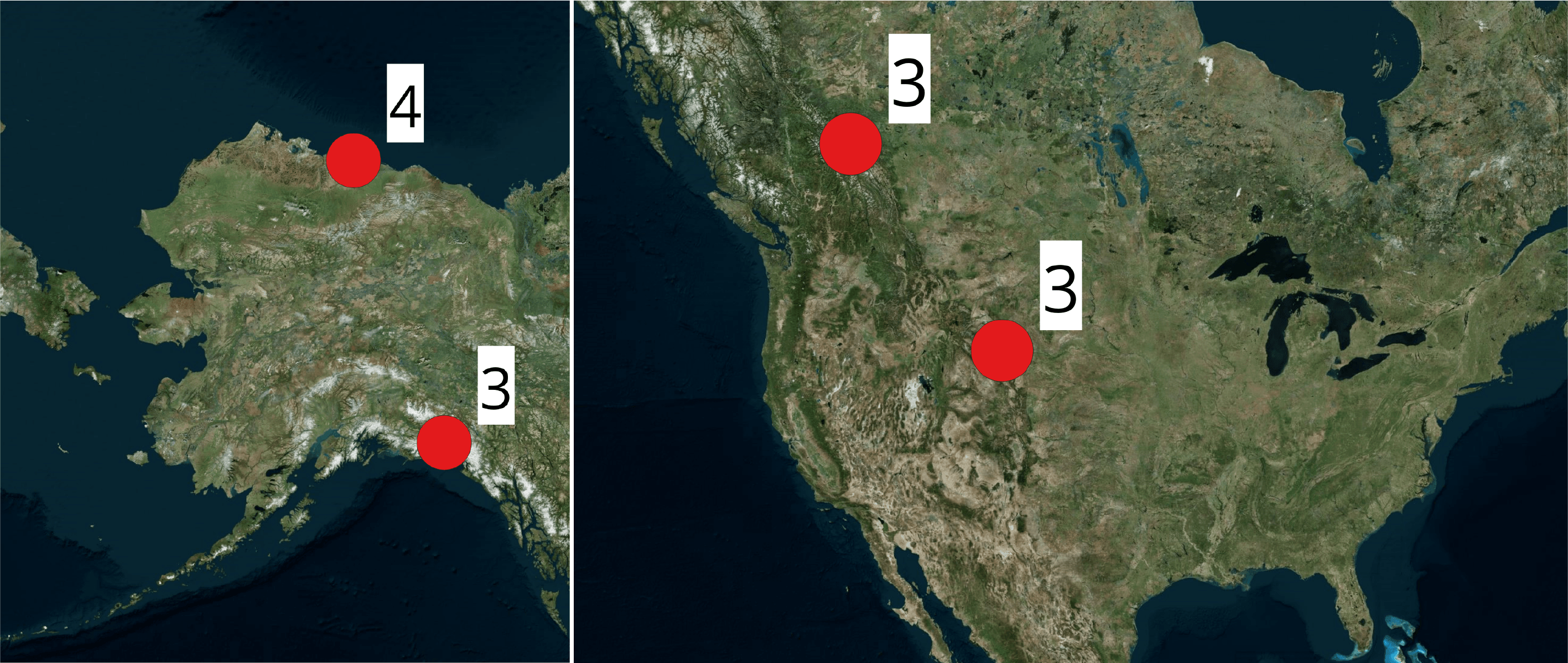
(3) The Collaborative Research: North American ice patches: Assessing formation, morphology, and persistence through the Holocene and links to climate, humans, and the environment project (PIs Nathan Chellman, Dave McWethy, David Christianson; NSF award numbers 2503837, 2503838, 2503839) will study North American ice patches located in the northern Rocky Mountains and Alaska to develop detailed, multifaceted records of environmental and ecological change in high-elevation regions across a range of geographic regions where few high-resolution, long-term historical records exist. Long-lived, shallow ice patches are relatively obscure ice features that have persisted for thousands of years in certain alpine landscapes and serve as ecologically and culturally significant archives of past climate and environmental conditions, vegetation changes, and human and animal activities. Because these ice patches can be up to 10,000 years old, they preserve some of the oldest ice on Earth outside the polar regions. The investigators’ field approach involves using ground penetrating radar to survey ice patches, shallow ice coring (using the Chipmunk Drill, Prairie Dog Drill, and Sidewinder) to retrieve ice samples for future study, and archaeological/ecological work to examine human and animal use of these ice features.
(4) The CAREER: Characterizing Feedbacks in Arctic Ponds while Incorporating Next-Generation Technologies and Arctic Field Experiences in Education project (PI Christian Andresen; NSF award number 2239038) seeks to characterize the role of Arctic wetland ponds in regional land-atmosphere carbon exchange, estimate their contributions of methane to the atmosphere, and assess how they have changed over the past 50 years to better anticipate their future role in Arctic carbon cycling and feedbacks to climate. Wetlands represent a significant portion of the Arctic landscape and are characterized by their numerous polygonal thaw ponds. These Arctic pond habitats are hotspots for biodiversity and carbon cycling. In particular, ponds are key emitters of methane, a potent greenhouse gas. The researchers will use a SIPRE Hand Auger to assist in the setup of eddy-covariance flux towers that measure methane and carbon dioxide fluxes from tundra ponds, and meteorological information.
Joint ICWG-ESAWG Community Meeting
In the previous Ice Bits newsletter, it was reported that an ice core community workshop would take place on Sunday, December 6, 2026, in San Francisco, CA, prior to the AGU Fall Meeting. However, during the 2026 Ice Core Working Group (ICWG) meeting, the ICWG decided not to hold a community meeting at the 2026 Fall AGU Meeting. Instead, the focus has turned to holding a joint ICWG and Englacial and Subglacial Access Working Group (ESWAG) meeting in Colorado in 2027. More details will follow as planning for the meeting progresses.
New Sidewinder Instructional Videos
IDP-Wisconsin has developed ten new short videos demonstrating the methods and steps for using the new Sidewinder. The videos were filmed by Andrew Haala and Jess Ackerman while they were at Summit, Greenland, in the summer of 2024. The short videos provide a complete overview of how to use the Sidewinder system. To view the videos, visit the Sidewinder webpage or the SideWinder Instructional Videos playlist on the IDP YouTube channel.
Science Advisory Board 2026 Meeting
The NSF Ice Drilling Program (IDP) convenes a Science Advisory Board (SAB) to form and update the Long Range Science Plan (LRSP) that addresses multiple aspects of ice core and other ice science and associated technology. The annual SAB meeting was held virtually on March 19, 2026, followed by email discussions of the technology investment priorities. Topics included updates from IDP and SAB prioritization of drilling technology development for the LRSP. The agenda and presentations from the meeting are available on the IDP website.
The members of the SAB are:
- Sarah Shackleton, Chair (Woods Hole Oceanographic Institution)
- Nathan Chellman (Desert Research Institute)
- T.J. Fudge (University of Washington)
- Joel Harper (University of Montana)
- Matthew Siegfried (Colorado School of Mines)
- Ryan Venturelli (Colorado School of Mines)
- Trista Vick-Majors (Michigan Technological University)
Englacial and Subglacial Access Working Group 2026 Meeting
A virtual meeting of the Englacial and Subglacial Access Working Group (ESWAG) was held on April 8, 2026, to discuss updates to the Long Range Science Plan (LRSP) and other ESAWG business. Discussions included updates from IDP and RAID. Terry Benson, Director of the Physical Sciences Lab at the University of Wisconsin–Madison, discussed water sampling for microbiologists from the IceCube drill and provided information relevant to science requirements for deep hot water drilling. David Harwood announced that due to university cuts and reorganization, The University of Nebraska–Lincoln would not be doing future deep hot water drilling, although they still have a few interested staff. Also, the ESAWG discussed ice drilling technology development priorities for the LRSP. The agenda and presentations from the meeting are available on the IDP website.
The members of the ESAWG are:
- Ryan Venturelli, Chair (Colorado School of Mines)
- Jason Briner (SUNY Buffalo)
- Brent Christner (University of Florida)
- Britney Schmidt (Cornell University)
- Jeff Severinghaus (Scripps Institution of Oceanography)
- Heidi Smith (Montana State University)
- Joseph Talghader (University of Minnesota)
Ice Core Working Group 2026 Meeting
A virtual meeting of the Ice Core Working Group (ICWG) was held on February 23, 2026, to discuss updates to the Long Range Science Plan (LRSP) and other ICWG business. Discussions included updates from IDP and the NSF Ice Core Facility (NSF-ICF), ICWG community planning, updates to the LRSP, ice drilling technology development priorities for the LRSP, and member rotations. The agenda and presentations from the meeting are available on the IDP website.
The members of the ICWG are:
- Becky Alexander, Chair (University of Washington)
- Murat Aydin (University of California Irvine)
- Christo Buizert (Oregon State University)
- Nathan Chellman (Desert Research Institute)
- Alex Michaud (The Ohio State University)
- Sarah Shackleton (Woods Hole Oceanographic Institution)
- Dom Winski (University of Maine)
Becky Alexander will rotate off the ICWG in the fall of 2026, at which time nominations will be solicited for a new ICWG member.
Requesting Field Support
If you are preparing a National Science Foundation (NSF) proposal that includes any kind of support from IDP, you must include a Letter of Support from IDP in the proposal. Researchers are asked to provide IDP with a detailed support request six weeks prior to the date the Letter of Support is required. Early submissions are strongly encouraged.
Researchers are also encouraged to contact IDP prior to submitting Concept Outlines to the NSF to discuss equipment availability and supportability for their upcoming proposed work.
Scientists who seek to include IDP education and outreach activities associated with U.S. ice coring or drilling science projects should contact Louise Huffman at Louise.T.Huffman@Dartmouth.edu during their proposal preparation stage.
For additional information on requesting IDP support, visit our website at https://icedrill.org/requesting-field-support or contact us at IceDrill@Dartmouth.edu.
Acknowledgment of IDP in Publications
If you receive any support from IDP, we kindly request you acknowledge IDP in any resultant publications or articles with the following statement: “We thank the NSF Ice Drilling Program for support activities through NSF Continuing Grant 2318480.” If you have any questions, please contact us at IceDrill@Dartmouth.edu.