2026 Spring/Summer Fieldwork Update
IDP is providing support to four projects during the 2026 spring/summer field season.
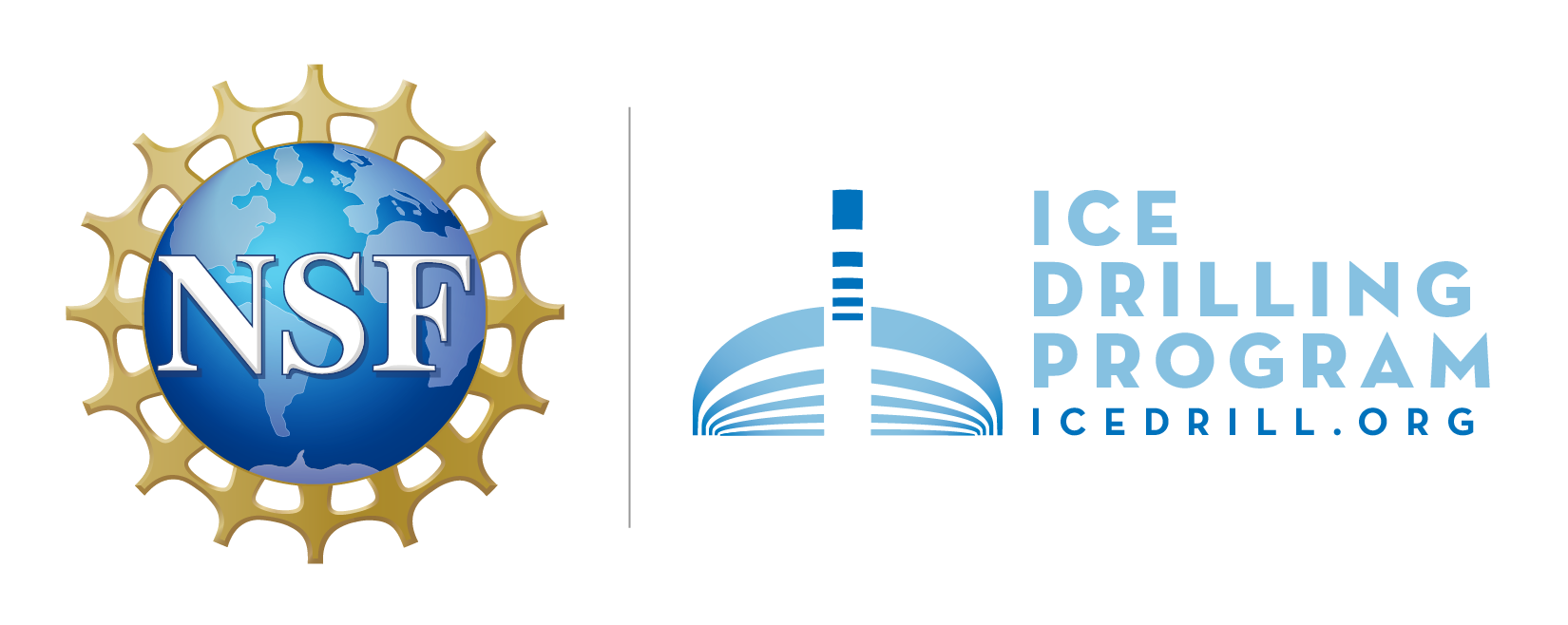
The Collaborative Research: AON Network for Observing Transformation of the Greenland Ice Sheet Firn Layer project (PIs Joel Harper and Toby Meierbachtol; NSF award numbers 2113391 and 2113392) completed its final season on the Greenland Ice Sheet. Over the course of five field seasons, the researchers used the IDDO Hand Auger and Sidewinder to collect repeat cores along the EGIG line to track changes in density and ice content and installed instrumentation in boreholes to monitor firn temperature evolution and compaction of the firn layer. The EGIG line, named after the Expédition Glaciologique Internationale au Groenland (International Greenland Glaciological Expedition) and first traversed in 1959, is a west-to-east scientific survey track that spans across central Greenland (at approximately 69°N to 71°N latitude) and cuts across every major climatological (e.g., ablation zone, percolation, dry snow, etc.) and structural (e.g., Holocene ice, glacial ice, and Eemian ice) zone of the ice sheet. The data from the researcher’s fieldwork will be highly valuable to scientists focused on changes in the storage capacity of the firn layer, process details of meltwater infiltration in cold firn, and the influence of firn compaction and melt on satellite-observed ice sheet elevation.
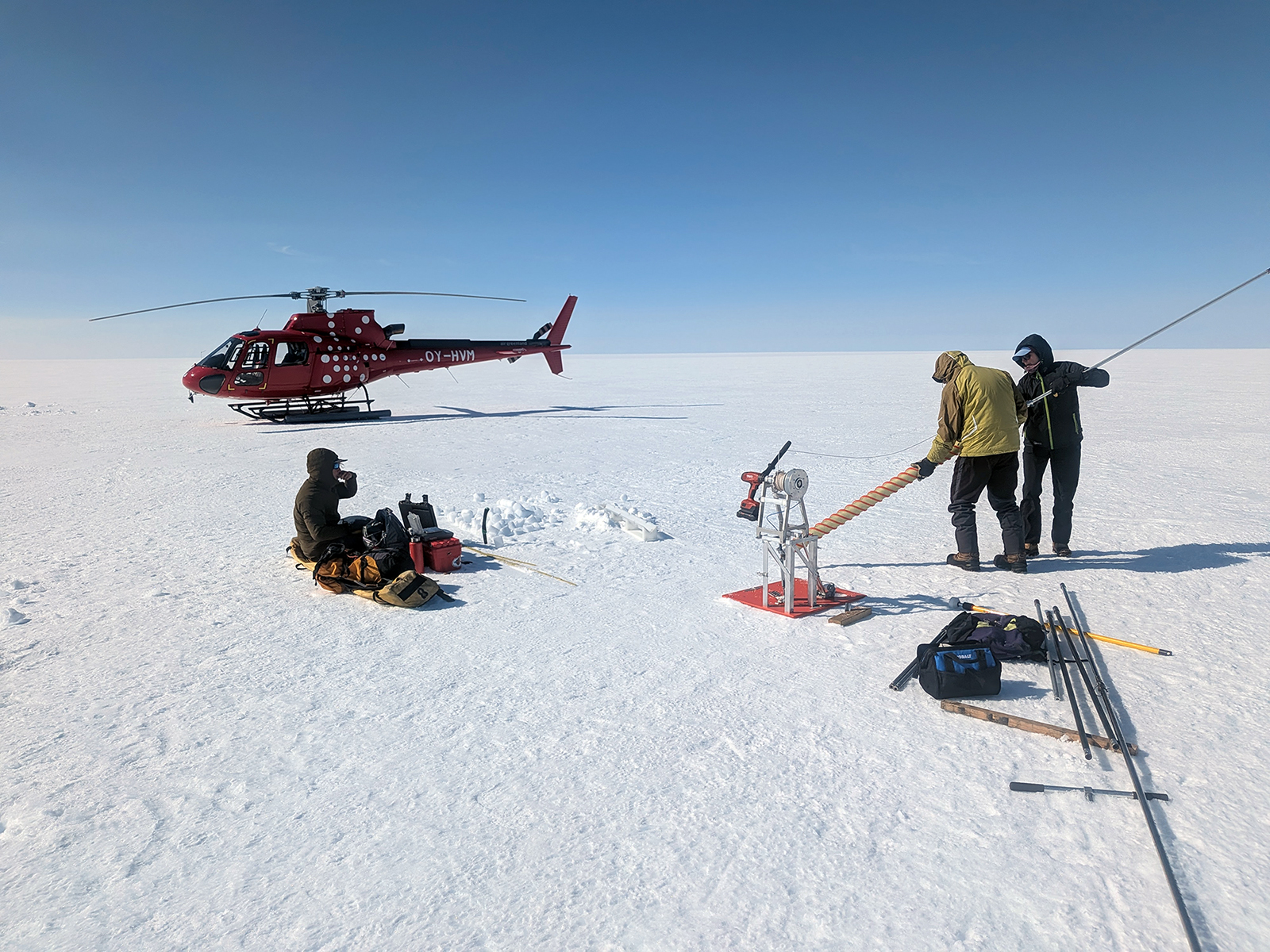
The Collaborative Research: North American ice patches: Assessing formation, morphology, and persistence through the Holocene and links to climate, humans, and the environment project (PIs Nathan Chellman, Dave McWethy, David Christianson; NSF award numbers 2503837, 2503838, 2503839) is studying North American ice patches located in the northern Rocky Mountains and Alaska to develop detailed, multifaceted records of environmental and ecological change in high-elevation regions across a range of geographic regions where few high-resolution, long-term historical records exist. Long-lived, shallow ice patches are relatively obscure ice features that have persisted for thousands of years in certain alpine landscapes and serve as ecologically and culturally significant archives of past climate and environmental conditions, vegetation changes, and human and animal activities. Because these ice patches can be up to 10,000 years old, they preserve some of the oldest ice on Earth outside the polar regions. In July and August, the investigators conducted research on the Chugach National Forest Ice Patch (Alaska) and the Tolman Ice Patch (Wyoming) using the Chipmunk Drill, a new lighter weight Prairie Dog Drill, and Sidewinder to retrieve ice samples for future study, archaeological/ecological work to examine human and animal use of these ice features, and ground penetrating radar to survey the ice patches. The researchers will finish this season’s fieldwork in Jasper National Park (Canada) in October.
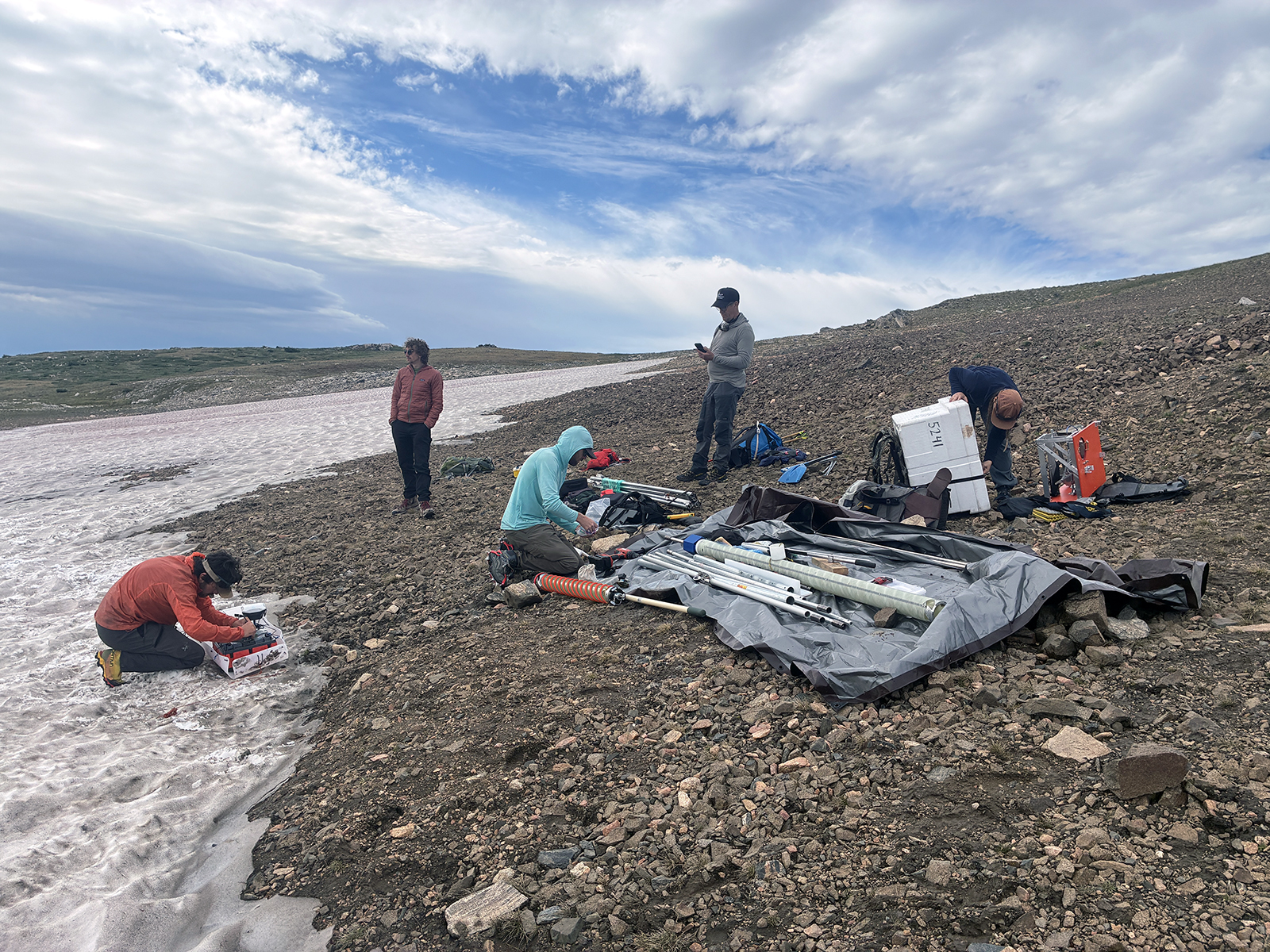
Using the IDDO 3-Inch Hand Auger and a PI-provided Kovacs Sidewinder, the WoU-MMA: Ice Characterization and Calibration to Enable Ultra-High Energy Neutrino Astronomy project (PI Dave Besson; NSF award number 2514262) drilled five cores/holes 15 to 20 meters deep near Summit, Greenland, to make fine-grained permittivity measurements, providing detailed information on radio-frequency propagation through polar ice. The investigators aim to resolve current discrepancies between data and calculations and fill in gaps in understanding, necessary for measurements of ultra-high energy neutrino-induced radio signals. The investigators also measured and placed limits on borehole closure, which is essential to the long-term operation of radio receiver detectors in Antarctica or Greenland.
The CAREER: Characterizing Feedbacks in Arctic Ponds while Incorporating Next-Generation Technologies and Arctic Field Experiences in Education project (PI Christian Andresen; NSF award number 2239038) seeks to characterize the role of Arctic wetland ponds in regional land-atmosphere carbon exchange, estimate their contributions of methane to the atmosphere, and assess how they have changed over the past 50 years to better anticipate their future role in Arctic carbon cycling and feedbacks to climate. Wetlands represent a significant portion of the Arctic landscape and are characterized by their numerous polygonal thaw ponds. These Arctic pond habitats are hotspots for biodiversity and carbon cycling. In particular, ponds are key emitters of methane, a potent greenhouse gas. The researchers used a SIPRE Hand Auger to assist in the setup of eddy-covariance flux towers that measure methane and carbon dioxide fluxes from tundra ponds, and meteorological information.
Call for Nominations: Science Advisory Board of the NSF Ice Drilling Program
The Science Advisory Board (SAB) for the NSF Ice Drilling Program (IDP) invites nominations, including self-nominations, from the U.S. scientific community to fill three open positions on the SAB. The SAB is seeking U.S.-based scientists with expertise in microbiology, ice-borehole/geophysical measurements, subglacial rock and sediment science, or related fields involving ice or subglacial materials and environments.
The primary purpose of the SAB is to provide advice and input on scientific issues pertaining to the NSF Ice Drilling Program, including annual updates to the IDP Long Range Science Plan. SAB members typically serve four-year terms, attend two annual SAB meetings per year—usually held virtually—and collaborate remotely as needed.
Please send nominations or self-nominations, including the nominee’s statement of interest and resume to the current SAB Chair, Sarah Shackleton (sarah.shackleton@whoi.edu), at your earliest convenience and no later than September 30, 2026.
2026-2036 Long Range Science and Long Range Drilling Technology Plans Updated
The NSF Ice Drilling Program (IDP), in collaboration with its Science Advisory Board and with input from the research community, updated the Long Range Science Plan. This plan aims to articulate goals and make recommendations for the direction of U.S. ice coring and drilling science across a wide variety of areas of scientific inquiry and to provide recommendations for the development of drilling technology, infrastructure, and logistical support necessary to enable the science. A companion document, the Long Range Drilling Technology Plan, provides details about drills available through IDP. Both plans are revisited and revised as appropriate each spring. The Long Range Science Plan is available at https://icedrill.org/long-range-science-plan. The Long Range Drilling Technology Plan is available at https://icedrill.org/long-range-drilling-technology-plan.
If you envision the need for ice drilling for your project in the coming decade, please make sure that the high-level articulation of your science is captured in the Long Range Science Plan. If it isn’t, send several sentences to IceDrill@Dartmouth.edu describing the science driver and the envisioned field date and location for your project so that your plans are voiced in this planning document.
Requesting Field Support
If you are preparing a National Science Foundation (NSF) proposal that includes any kind of support from IDP, you must include a Letter of Support from IDP in the proposal. Researchers are asked to provide IDP with a detailed support request six weeks prior to the date the Letter of Support is required. Early submissions are strongly encouraged.
Researchers are also encouraged to contact IDP prior to submitting Concept Outlines to the NSF to discuss equipment availability and supportability for their upcoming proposed work.
Scientists who seek to include IDP education and outreach activities associated with U.S. ice coring or drilling science projects should contact Louise Huffman at Louise.T.Huffman@Dartmouth.edu during their proposal preparation stage.
For additional information on requesting IDP support, visit our website at https://icedrill.org/requesting-field-support or contact us at IceDrill@Dartmouth.edu.
Acknowledgment of IDP in Publications
If you receive any support from IDP, we kindly request you acknowledge IDP in any resultant publications or articles with the following statement: “We thank the NSF Ice Drilling Program for support activities through NSF Continuing Grant 2318480.” If you have any questions, please contact us at IceDrill@Dartmouth.edu.